Layout Image
    • Home
    • About
    • Contact
    • Contributors

Sunday School Leaders

If you are a teacher, leader, facilitator, director, or education minister; you are part of the Sunday School movement. Nationwide, there are over 400,000 Southern Baptist Bible study leaders! We hope you find this blog to be a helpful place to network with others and sharpen your talents.

Resources

Click here for our resourcess
The SSSDA has a number of resources available to help your group. Go here for videos, books, pamphlets, and resources developed by SSSDA members. Resources for Sunday School directors are also available at www.sundayschooldirector.com.

Jan
31

How to Effectively Group People in Sunday School/Small Groups

By Kenneth Priest · Comments (0)
Share

There are several primary considerations for effectively organizing groups for Sunday School/Small Groups. Before developing your structure, account for the total active church membership. Second, determine whether the groups will be offered on-campus, off-campus, or both. Finally, evaluate community and church demographics. Once the primary considerations are determined, you can begin grouping people for effective community.

Grouping people effectively requires intentionality. Whether using on-campus or off-campus groups, focus should be given to creating genuine community. This is accomplished by modeling the biblical principles of Acts 2:42; “And they devoted themselves to the apostles’ teaching, to fellowship, to the breaking of bread, and to prayers.” (HCSB). When a group focuses on studying God’s Word, praying for one another, spending quality time getting to know one another, and meeting together consistently, an environment is cultivated for community. Once community is created, there is a natural attraction for persons to connect with the group. The genuine community which exists is a warm, inviting atmosphere.

Simple group dynamics state persons connect with others persons of affinity. Effective grouping, therefore, works best through these considerations. There are several options to group persons.

Age-grade

This category groups persons who are at the same age. Smaller churches typically have larger age-spans in these groups which creates part of the challenge in dynamics to grow a particular group. Twenties typically do not have much in common with forties, yet the smaller the congregation, a young adult class may span the ages of 20-49 year old. Whereas critical mass is important, a healthier balance may need to be considered with emphasis given to the group-size:age-graded ratio., (ratio is philosophical, most off-campus groups will be below 15, on-campus groups will vary in size based on leadership abilities).

Life-Stage

This category groups persons who are at a similar life-stage. This may be determined by age of the children, grandchildren, retirement, the fact of being a boomer, etc. An example is a group may be for parents of elementary age children. The effectiveness of this model is most persons are going through similar experiences whether professionally in the marketplace or personally in home life.

Note:  when using the age of the children to group parents, you may have older 40s in the class as persons who married and had children later in life compared to couples in their 20s or early thirties with the same age children. Using the age of children may disregard couples without children which are an ever-increasing portion of the population.

Interest

This category groups persons around interest. Categories may include men only, women only, sportsmen, outdoors men, marketplace women, etc. The effectiveness of this model is inherent in the “interest” itself. The challenge of this model is using the “interest” group to connect while keeping the study focused on God’s Word.

Proximity

There are two options in using off-campus groups. You may choose a similar structure as the on-campus for creating community groups centered around age, life-stages, and/or interest. The other option is proximity groups. If your demographics draw from all over the community, an off-campus group may be organized with persons who live in the same neighborhood or proximity. This option may bring together varied generations into community groups. This multi-generational approach creates inherent mentor-mentee relationship opportunities. A challenge to this approach is the participants do not have a common-bond of going through similar “life-stage” milestones together. A positive is an older person in the group has “been there, done that” and can share from his/her life experiences.

Effectiveness for either group, on-campus or off-campus, weighs on intentionality of the leadership team. Leadership development is core to either option succeeding. Leaders must be prepared and equipped to reproduce themselves as the group connects and grows. Effective groups have an outward focus. As group leaders insure all persons are connecting, caring environments are created and ministry occurs.

More information regarding this topic can be found in Missionary Sunday School by David Francis.

Categories : 5 Weeks of Flake, Flake's Formula, Growing your Group, Leadership, Ministry, Organization, Space and Facilities, Sunday School
Comments (0)
Jan
26

Basic Home Group Space Principles

By David Bond · Comments (0)
Share

My family has relocated several times over the past fifteen years.  While numerous tasks accompany this experience, one of the most important is finding a new home.  Factors such as location, cost, proximity to school, work, and church, neighborhood, must all be considered.  Deciding on the best home is the result of careful evaluation, establishing priorities, and wise management of resources.

What about finding a home for your small group family?  For many churches, accelerated growth and limited space may require new groups to meet away from the church building.  When churches seek to find off-campus locations for groups, many factors must also be considered.

The Purpose of the Group

For this post, assume the home group is an extension of the Sunday School and is designed to function as an open group.   Assist the group members in identifying their target people group whether it is families in the neighborhood or already identified acquaintances from the social circles of group members.  Some groups may not choose to meet in a home at all but rather a more neutral location such as a coffee shop in order to engage those who are completely unreached.  Home groups should be able to clearly identify their people group.

The Environment of the Home

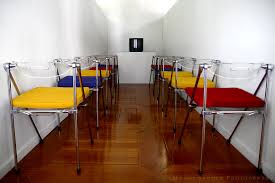
The host home should be warm and welcoming.  While every host wants to be ready for guests, the message should be that real people still live in the house.  No one wants to have a small group meeting in a museum.  Furnishings, décor, and overall atmosphere should invite group participants to feel at home and in the company of others to whom they can relate.  Space should be sufficient for a seating arrangement that allows group members to view each other’s faces.  Other considerations such as ease of locating, access, and parking should also be kept in mind.

Participants in the Group

Who will attend the group meeting?  Ten single people will arrive in a different number of vehicles than five married couples.  If children will be present at the meeting, teenagers will require different space than preschoolers.  If the group has children of all ages, the variety of space needs increases again.    Access for disabled group members may also need to be considered.

Proximity to the Church

In some cases, groups may meet in a home while their children participate in a program at church.  This solution may work, but travel time between the host home and church must be factored into the overall time allotted.  Also, consider the strategy you will use to eventually connect small group members to worship and service in and through your church.

Elements of the Meeting

If a meal is a part of the meeting, preparation and serving space should be considered.  If the Bible study content is video driven, quality picture and sound is a must.  Should the group desire to break off into smaller groups for prayer/accountability, this also may need to be thought through.

Be thorough when selecting a home for your small group family.

Categories : 5 Weeks of Flake, Growing your Group, Mission, New Groups, Small Groups, Space and Facilities, Sunday School
Comments (0)
Jan
25

Basic Classroom Space Principles

By Tom Belew · Comments (0)
Share

The kind and quality of space for a class or department has a significant impact on overall success of the class. At a minimum space should be clean, attractive and large enough for the current attendance plus a few guests. Age-appropriate furniture and equipment should be in the room depending on the classes or departments using the space. The following chart provides some basic guidelines for the amount of space needed per person by groups:

Access to space is another important concern. Parents with preschoolers and older adult need the space to be convenient to parking, with ground level access.

Adult and student rooms are best painted in soft, neutral colors with a color accent wall or trim. Carpet is the preferred floor covering. The room needs a focal wall with a whiteboard or chalkboard, as well as, chairs for participants and table(s) if there is adequate space. The focal wall needs open space for posters. There should be a cabinet or open shelf for basic supplies. It is a good idea to have a few extra Bibles in the room.

Preschool and children’s rooms are best painted in soft, neutral colors with a color accent wall or trim. The furniture should be age-appropriate. There should be a focal wall or bulletin board for displays with the exception of younger preschoolers. Preschool rooms are set up by activity areas with the exception of babies and 1’s. Preschool rooms need a water source and restroom in the room or nearby. The preferred floor covering is carpet with the exception of vinyl floors for babies-1’s.

Caring for preschoolers includes providing a clean environment where the child can explore, create, learn and play. That means toys, teaching materials, equipment, walls and floors need to be clean and ready for the child. It is important to be aware of cleaning procedures and hygiene practices to ensure a safe and clean environment for the child. For recommended hygiene practices visit http://www.lifeway.com/Article/childhood-ministry-basics.

In conclusion, I want to share some common shortfalls I find when consulting with churches. Entrances and doors are not clearly marked. Today, it is highly important to have a visible registration/check-in process for preschoolers. Preschool rooms often have too many and inappropriate toys (they can produce a safety hazard or might be unrelated to teaching). It is common to find outdated displays and posters on walls and bulletin boards. I find furniture with sharp edges or broken tables and chairs still in use. Often, I find rooms filled with lots of equipment and other items unrelated to its use(s). Learn to think like a guest; look around your room to see if anything would catch a guest’s attention. When we are expecting guests at home we clean house. Why don’t we do that at church? Maybe we are not expecting guests?
_______________________________________
Tom Belew has served as Small Groups and Childhood Specialist for the California Southern Baptist Convention since 2002. He previously served as Minister of Education in churches in Arizona and California.

Categories : 5 Weeks of Flake, Organization, Space, Space and Facilities, Sunday School
Comments (0)
Jan
24

Space for the Kids

By Richard Nations · Comments (1)
Share

The most important areas in a church building are the Sunday School rooms for the preschoolers and children.  Some might want to argue that point, but it’s important that the kids ministry area be top quality.

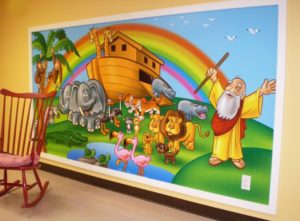
This is the area of the church that should be well-equipped and should “shine” as you enter the area.  When young families with children come to the church for the first time, they are evaluating the preschool and children space as they drop their children off for Sunday School and for preschool care during worship times.

Unfortunately some churches allow these areas to become cluttered, outdated and are placed in less than convenient areas of the church educational facilities.  Don’t let that happen.  Lead your Sunday School ministry to make preschool and children’s space a priority instead of an add-on.

There are several reasons for doing so.  Here’s a list of a few:

  • Preschoolers and children need more space than youth and adults (it is recommended that preschool rooms have 35 square feet per child and children’s rooms have 25 square feet per child).  This may seem like a lot, but preschoolers need room crawl and toddle around.  Children are active and need some space to move and do activities during Sunday School teaching times.
  • Parents are taking note.  If it’s not clean or updated, they probably won’t feel comfortable leaving their children in that room.  Make sure the floor coverings are clean and modern.  Have bright lighting and colorful painted and decorated walls.  Check the safety of the furnishings and equipment.  In recent years there have been new federal safety guidelines issued for baby cribs so make sure the cribs meet these standards.
  • If the preschool and children’s areas are in an inconvenient place or not near the worship center, consider doing a swap with other age groups.  With the exception of the senior adult classes (which should also be on a main level near the worship center) you could possibly arrange for adults or youth to be further away or on other levels of the facility.  Parents want their children fairly close by and they like the ease of dropping off children soon after they enter the building, so try to have preschool/children rooms in convenient areas.
  • It’s about the kids!  When Sunday School ministry started in the late 1700’s in England, it was a ministry for children.  Don’t forget the kids.  When children come to Sunday School, it is often an easy step or two to also reach their parents.

If you need to review the safety and security of your kids ministry facilities, here’s a link to a document  you can download.

___________________________

Richard Nations is the Church Health Team Leader at the Baptist Convention of Iowa.  Reach him at rnations@bciowa.org.

Categories : 5 Weeks of Flake, Flake's Formula, Organization, Space and Facilities
Comments (1)
Jan
22

Provide Space and Equipment for Sunday School Growth

By Darryl Wilson · Comments (0)
Share

This month, we have been sharing five areas of Sunday School growth that have become known as Flake’s Formula: (1) know the possibilities, (2) enlarge the organization, (3) provide space and equipment, (4) enlist the leaders, and (5) go after the people. In today’s post, we will examine how important it is to “provide space and equipment” in order to allow Sunday School growth to take place. Consider these ways and reasons to provide space and equipment:

  • ENOUGH ROOMS. In Is the Size of Your Sunday School POT Keeping You Small, Part 1 and Is the Size of Your Sunday School POT Keeping You Small, Part 2, I shared this idea from Ken Hemphill in The Bonsai Theory of Church Growth: “You must keep the pot small to keep a bonsai small, and in a similar way many churches keep the church and Sunday School small because they keep the facilities small.” In order for your Sunday School to grow, you must have space available in which to start new classes. This can include using the space more than once and even using off-site space.
  • ENOUGH SPACE. Adults and teens need about 12-15 square foot per person. Children need 25 square foot. Preschoolers (due to activity level) need 35 square foot. When attendance approaches 80% of capacity of the room, growth will slow or stop. Moving classes to rooms of appropriate size to allow for growth is essential. Also, when a class reaches or exceeds the space’s capacity, it is time to start a new class.
  • ADEQUATE SPACE. There are many issues to consider in making sure that the space you provide for classes is adequate, such as appearance, location, usefulness, safety, cleanliness, noise, and more. Check out Conduct an Adult & Student Sunday School Space Walk for a set of questions from which you can evaluate your adult and youth space. When possible, locate preschool and senior adult space close to worship space.
  • ADEQUATE EQUIPMENT. What is needed by each age group is appropriately different. Certainly chairs and tables (if needed) should be of the right size for the assigned age group(s). It is important to provide the equipment and furnishings needed while taking into account the space available and potential attendance. As attendance begins to approach 80% of capacity, as much equipment and furnishings as possible should be removed making more room for people.
  • TOO MUCH EQUIPMENT. Too often classrooms fill earlier than necessary due to too much equipment and furnishings in the space. Tables are often the biggest culprit. People are more important than tables. Removing tables to have space for more people is more important that coddling people’s preferences (to hold coffee and Bibles and cover short skirts). Sometimes more chairs are in the room than are necessary. Only one or two more than expected attendance should be kept in the room. In fact, it can be depressing to enter a room with 20 chairs and only 3 attenders, while it can be exciting to have to set up one or two more chairs.

Make sure you plan ahead. Don’t get to a place where you need to start a class but lack the space, furnishings, and equipment needed. Anticipate needs. Plan ahead. Expect to grow.

For more ideas about Sunday School space, check out these blog posts:

  • Foundational Pillars of a Sunday School that Grows, Part 8
  • Revolutionary Adult Sunday School Classroom Space
  • Assigning Sunday School Space to Preschoolers and Others
  • Creative Places for Sunday School Classes and Small Groups to Meet
  • How to Evaluate Your Sunday School Facilities
  • Is It Time for a Sunday School Clean-up Day?
  • Would You Like to Double Your Sunday School Space?
  • Do You Have Enough Sunday School Space?
  • Why It’s Best Not to Use Tables in Sunday School Classes

_____________________________________________

Darryl Wilson has served as Director of the Sunday School Department for the Kentucky Baptist Convention since 1997. He served as Minister of Education in five churches in Kentucky and South Carolina. He is the author of The Sunday School Revolutionary!, a blog about life-changing Sunday School and small groups.

Categories : Flake's Formula, Space, Space and Facilities, Sunday School
Comments (0)
Next Page »

Subscribe to our blog

Subscribe to Sunday School Leaders

Get the latest updates delivered via email

Follow sundayschoolldr

Facebook Twitter Contact

Categories

  • 31 Days of Transformational Class (30)
  • 31 Days to a Better Teacher (33)
  • 5 Weeks of Flake (27)
  • Bible Study (32)
  • Enlistment (17)
  • Evangelism (2)
  • Flake's Formula (18)
  • Great Expectations (33)
  • Group Life (3)
  • Growing your Group (30)
  • Hook Book Look Took (5)
  • Leadership (56)
  • Ministry (63)
  • Mission (21)
  • New Groups (15)
  • Organization (14)
  • Outreach/Evangelism (72)
  • Prayer (20)
  • Small Groups (16)
  • Space (5)
  • Space and Facilities (11)
  • Sunday School (239)
  • Teaching (46)
  • Theology (2)
  • Training (11)
  • Transformation (11)
  • Vacation Bible School (11)

Blogroll

  • Bob Mayfield
  • Darryl Wilson
  • Mark Miller

What we are reading

Just Walk Across the Room The Master Plan of Evangelism What is the Gospel Revitalizing the Sunday Morning Dinosaur

Copyright © Sunday School Leaders | Admin Login

designed and developed by Sara Graybill